
The internet has a new favorite obsession: balancing hormones. If you have scrolled through TikTok or Instagram recently, you have likely seen wellness influencers mixing up a vibrant, orange-tinted beverage promising to cure your midday slump, banish “adrenal fatigue,” and lower your stress levels. They call it the “Cortisol Cocktail.”
With millions of views and countless testimonials claiming this drink is a miracle cure for modern burnout, it is easy to see the appeal. We are all living in a fast-paced, high-stress world, and the idea that a simple, aesthetic mocktail could fix our frayed nerves is incredibly tempting.
But as with all viral nutrition trends, it is crucial to look past the aesthetic videos and examine the hard science. Does mixing juice and salt actually impact your hormones? Is “adrenal fatigue” even a real medical condition? And most importantly, how does this drink fit into your daily macronutrient goals?
Let’s fact-check the Cortisol Cocktail, break down its nutritional profile, and see if it is actually worth adding to your daily routine.
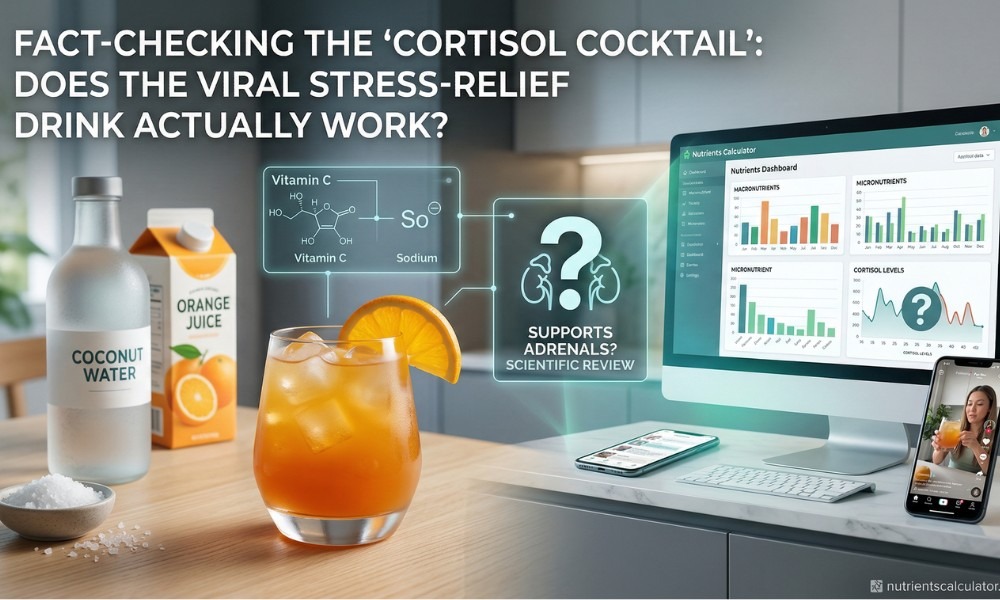
The Viral Promise: What Is the “Cortisol Cocktail”?
Despite its name, the Cortisol Cocktail (often referred to as an “adrenal cocktail”) does not contain any alcohol, nor does it contain cortisol. It is a homemade beverage typically consumed first thing in the morning or during the mid-afternoon energy crash.
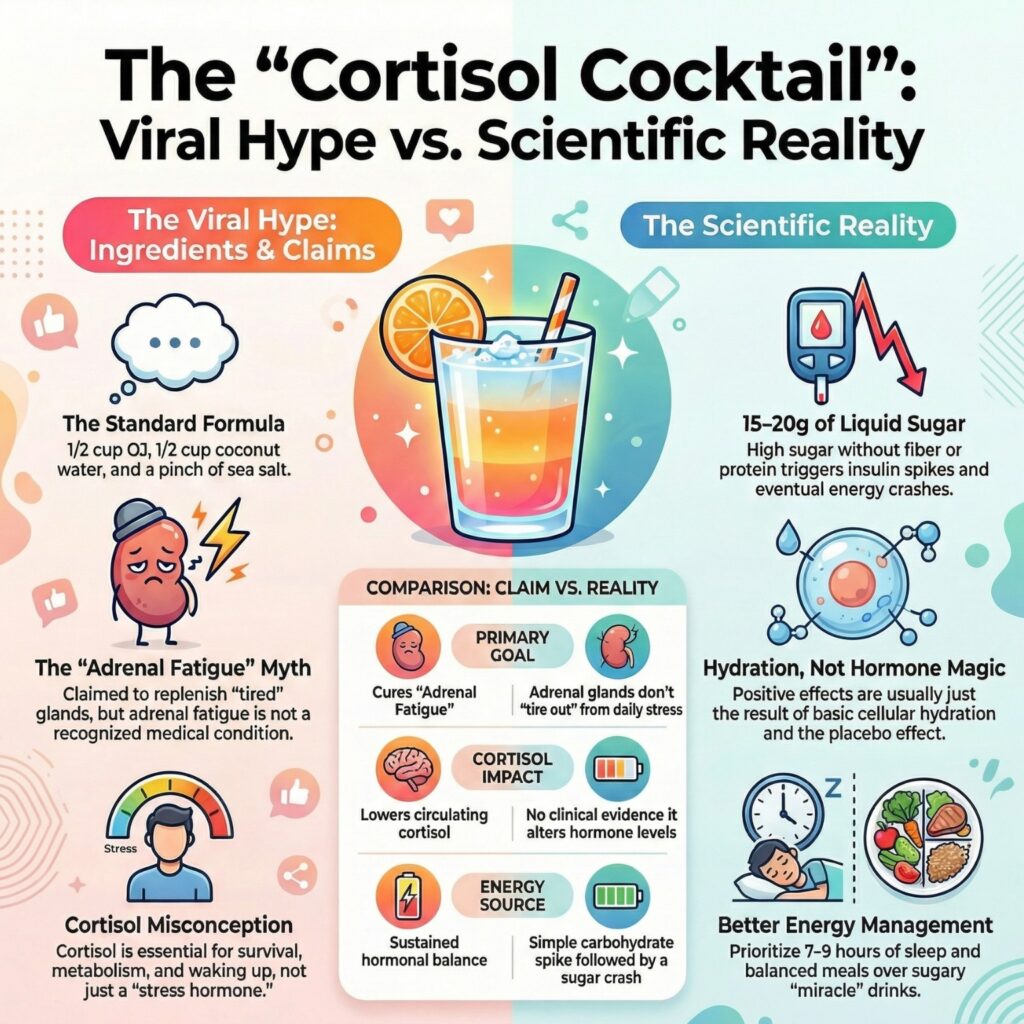
While recipes vary across the internet, the standard formula is surprisingly simple:
- 1/2 cup of fresh orange juice (or lemon juice)
- 1/2 cup of coconut water
- A generous pinch of sea salt or pink Himalayan salt
- (Optional) A scoop of magnesium powder or a pinch of cream of tartar
Proponents of the drink claim that chronic stress depletes the body of essential minerals, leaving your adrenal glands “fatigued.” By drinking this specific combination of Vitamin C, potassium, and sodium, they argue that you can replenish your adrenal glands, lower your cortisol levels, and restore your natural energy.
Understanding Cortisol: Why the “Stress Hormone” Isn’t Your Enemy
To understand the drink, you first have to understand the hormone it targets. Cortisol is produced by the adrenal glands, which sit right on top of your kidneys. It is almost universally branded as the “stress hormone,” giving it a terrible reputation in the wellness space.
However, cortisol is essential for your survival. It regulates your metabolism, manages inflammation, and controls your blood pressure. It is also the primary driver of your circadian rhythm. In a healthy body, cortisol levels naturally spike in the early morning to wake you up and give you the energy to start your day. As the day progresses, cortisol levels gradually taper off, reaching their lowest point at night so you can sleep.
While chronic, unmanaged stress can indeed cause cortisol levels to remain elevated—leading to sleep disruption, weight gain, and anxiety—you actually want a healthy spike of cortisol in the morning. Attempting to suppress it completely would leave you utterly exhausted and unable to function.
The Myth of “Adrenal Fatigue”
The entire premise of the Cortisol Cocktail rests on curing “adrenal fatigue”—the idea that years of stress cause your adrenal glands to burn out and stop producing enough hormones.
Here is the scientific reality: Adrenal fatigue is not a recognized medical condition. According to endocrinologists and major medical institutions, your adrenal glands do not simply “tire out” from everyday stress. While there is a legitimate medical condition called Adrenal Insufficiency (Addison’s disease), it is a rare disorder typically caused by an autoimmune disease or pituitary gland damage, not by a busy work schedule.
If adrenal fatigue isn’t real, how can a drink claim to cure it? To answer that, we have to look at the ingredients themselves.
Deconstructing the Recipe: A Nutritional Breakdown
If the drink isn’t fixing a medical condition, what is it actually doing to your body? Let’s break down the ingredients step-by-step.
1. Orange Juice (Vitamin C and Simple Carbs)
The adrenal glands do use a high amount of Vitamin C to function. Orange juice provides a quick hit of this essential antioxidant. However, unless you are actively suffering from scurvy or a severe clinical deficiency, the extra Vitamin C from a half-cup of juice is not going to fundamentally alter your hormone production.
2. Coconut Water (Potassium)
Coconut water is frequently praised as nature’s sports drink. It is rich in potassium, an essential electrolyte that helps regulate fluid balance, muscle contractions, and nerve signals. Potassium is incredibly healthy, but again, it does not directly lower cortisol levels.
3. Sea Salt (Sodium)
When we are stressed, our bodies can excrete more sodium. Adding a pinch of salt to your drink helps replenish this lost electrolyte. Sodium is vital for cellular function, but consuming excess salt, especially for those with high blood pressure, can actually have adverse health effects.
4. Magnesium Powder (The Calming Agent)
Many creators add magnesium powder to their cocktails. Of all the ingredients, magnesium has the most scientific backing for stress relief. Magnesium helps regulate the nervous system and promotes muscle relaxation. However, the dose in a single drink is often quite low, and taking it in the middle of the day might just make you sleepy rather than “focused.”
The Reality: When you combine water, potassium, and sodium, what have you created? An electrolyte drink. The Cortisol Cocktail is essentially a homemade, natural alternative to Gatorade or Liquid I.V.
The Macro Reality: What This Drink Does to Your Diet
Before you mix up a pitcher of this trending drink, it is crucial to look at it through the lens of macronutrients.
When you run these ingredients through a nutrient tracking tool, the reality becomes clear: this drink is a carbohydrate bomb with zero protein and zero fat to slow down digestion.
A typical serving containing orange juice and coconut water yields roughly 15 to 20 grams of sugar. Because there is no dietary fiber (the juicing process removes the fiber from the oranges), these simple carbohydrates enter your bloodstream rapidly.
This creates a sharp spike in blood glucose levels, prompting your body to release a surge of insulin. While you might feel an initial rush of energy, what goes up must come down. The inevitable blood sugar crash that follows a few hours later can leave you feeling more fatigued, irritable, and jittery than you were before—ironically mimicking the exact symptoms of stress and anxiety you were trying to cure in the first place.
If you are carefully tracking your macros to maintain stable blood sugar, lose weight, or build muscle, drinking 20 grams of liquid sugar on an empty stomach is highly counterproductive.
The Verdict: Does the Cortisol Cocktail Actually Lower Stress?
The short answer is: No. There is zero clinical evidence that mixing orange juice, coconut water, and salt will lower your circulating cortisol levels or magically reset your hormones.
So why do so many people on the internet swear by it? Why do they claim they feel amazing after drinking it?
- Hydration: Most adults are walking around chronically dehydrated. Drinking a large glass of liquid packed with electrolytes first thing in the morning is going to make you feel significantly better, more alert, and less “brain foggy.” It isn’t hormone magic; it is basic cellular hydration.
- The Blood Sugar Boost: If you are experiencing a mid-afternoon slump, a quick hit of 20 grams of sugar will absolutely give you a temporary burst of energy.
- The Placebo Effect: Taking five minutes out of your stressful day to purposefully mix a beautiful drink and sip it quietly is a form of mindfulness. The act of pausing and practicing self-care is likely what is lowering your stress, not the juice itself.
Better Ways to Manage Your Energy and Macros
If you want to genuinely manage your stress levels, support your hormones, and maintain high energy throughout the day, skip the viral trends and stick to the physiological facts:
- Prioritize Sleep: Nothing regulates cortisol better than 7 to 9 hours of quality, uninterrupted sleep.
- Eat Balanced Meals: Instead of drinking liquid sugar, stabilize your energy by eating whole foods. Pair carbohydrates with high-quality protein and healthy fats. This slows down digestion and prevents the blood sugar roller coasters that trigger anxiety and fatigue.
- Hydrate Smartly: If you want the benefits of electrolytes without the sugar crash, add a pinch of salt and a squeeze of lemon to plain water, or eat potassium-rich whole foods like avocados, bananas, and spinach.
- Move Your Body: Regular, moderate exercise is proven to help the body process and clear excess stress hormones.
The Bottom Line
The Cortisol Cocktail isn’t necessarily dangerous for the average healthy person, but it is not the stress-busting miracle it claims to be. It is simply a sugary electrolyte beverage wrapped in clever marketing.
Before you add any trendy new food or drink to your daily routine, it is always best to look at the math. Head over to our Nutrients Calculator to see exactly how 20 grams of liquid sugar impacts your daily macro targets. By understanding exactly what you are consuming, you can build a nutrition plan based on science, not social media trends.