
At the end of a long, exhausting day, the thought of chopping onions, marinading chicken, and washing a sink full of pots and pans can feel like an insurmountable mountain. Enter the internet’s favorite culinary rebellion: “Girl Dinner.”
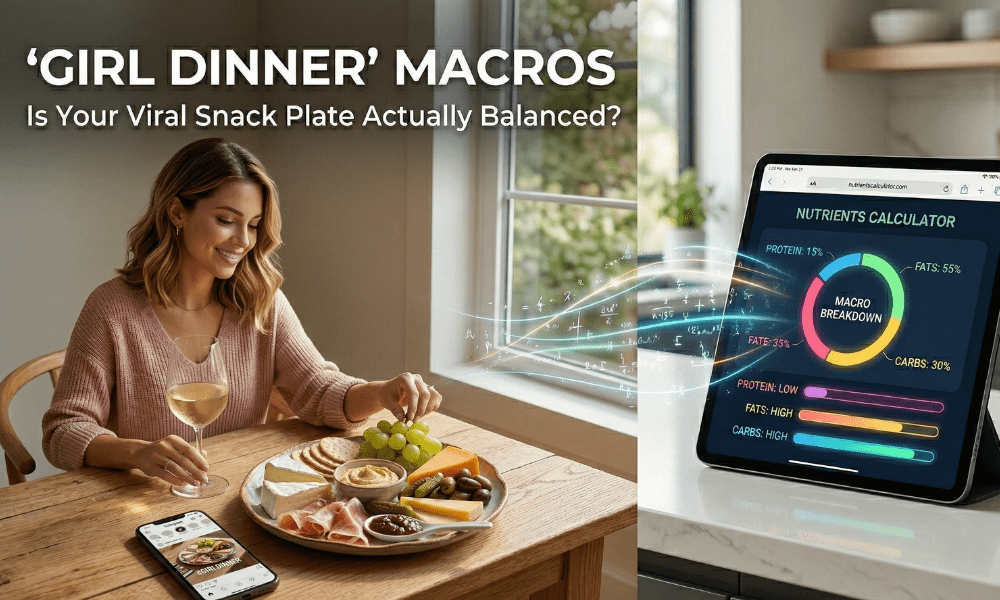
If you have spent any time on TikTok, Instagram, or X (formerly Twitter) over the last year, you know exactly what this is. It is the art of the glorified snack plate. It is an assortment of cheese, a handful of crackers, some pickles, maybe a few slices of deli meat, some fruit, and a glass of wine, all beautifully (or chaotically) arranged on a plate. No cooking, no real prep, and minimal cleanup.
Culturally, Girl Dinner is a masterpiece. It represents a collective rejection of the pressure to prepare a traditional “meat, carb, and two vegetables” dinner every single night. It is intuitive, it is lazy luxury, and it is incredibly satisfying.
But as a nutrition platform, we have to ask the uncomfortable, contrarian question that no one on social media wants to hear: When you strip away the aesthetic lighting and the relatable audio, what is actually on that plate? Are we practicing intuitive eating, or are we accidentally building macro-disasters that leave us fatigued, bloated, and hungry again by midnight?
We decided to play the bad cop. We took three of the most common, viral “Girl Dinner” archetypes, ran them through a nutrient calculator, and broke down the hard data. Let’s see if your favorite snack plate is actually fueling your body.
The Macro Problem with Grazing
Before we look at the plates, we need to understand the physiological trap of “grazing.”
When you sit down to eat a traditional, structured meal, you naturally tend to balance your macronutrients. You have a distinct protein source (chicken, tofu, fish), a complex carbohydrate (rice, potatoes), and some dietary fiber (broccoli, side salad).
When you build a meal entirely out of snack foods, that structure vanishes. Snack foods, by their very design, lean heavily into two specific macronutrients: Fats and simple Carbohydrates. Protein and fiber are almost always the casualties of a snack plate.
When a meal is high in fat, high in simple carbs, and devoid of protein and fiber, two things happen:
- The Blood Sugar Rollercoaster: Simple carbs (like crackers and dried fruit) spike your blood sugar. Without protein to slow down digestion, that spike is followed by a rapid crash, leading to late-night sugar cravings.
- The Calorie Illusion: Because snack foods are physically small (think of a cube of cheddar or a handful of almonds), they don’t take up much volume in your stomach. You can easily consume 1,000 calories of cheese and nuts without feeling the physical sensation of being “full.”
Let’s look at the data.
Case Study 1: The “Aesthetic Charcuterie” Girl Dinner
This is the most romanticized version of the trend. It looks like you are dining at a Parisian cafe, even if you are just sitting on your couch in sweatpants watching Netflix.
The Plate:
- 2 oz Brie cheese
- 2 oz Prosciutto
- 15 artisan water crackers
- A handful of green grapes (approx. 1 cup)
- 2 tablespoons of fig jam
- 1 standard glass of white wine (5 oz)
The Macro Breakdown:
- Total Calories: ~840 kcal
- Protein: 25g
- Carbohydrates: 78g (Over 40g of sugar from the jam, grapes, and wine)
- Fats: 42g
- Sodium: ~1,300mg
The Verdict: A Blood Sugar Trap While 25 grams of protein isn’t terrible, it is entirely overshadowed by the massive fat and carbohydrate payload. 840 calories is a very heavy dinner for the average person, yet the physical volume of this food is quite small. Furthermore, the combination of alcohol, high sodium (from the prosciutto and cheese), and high sugar almost guarantees you will wake up feeling puffy, dehydrated, and groggy.
Case Study 2: The “Pantry Goblin” Girl Dinner
This is the chaotic, highly relatable end of the spectrum. You haven’t gone grocery shopping in two weeks, and you are simply foraging in your own kitchen for survival.
The Plate:
- 2 large dill pickles
- 1 string cheese (mozzarella)
- A large handful of tortilla chips (approx. 2 oz)
- 1 spoonful of peanut butter (eaten straight from the jar)
- 1 Diet Coke
The Macro Breakdown:
- Total Calories: ~450 kcal
- Protein: 14g
- Carbohydrates: 41g
- Fats: 26g
- Sodium: ~1,100mg
The Verdict: The “Skinny” Starvation Plate At first glance, 450 calories seems like a reasonable, even light, dinner. But look at the composition. You are getting virtually zero micronutrients, vitamins, or fiber. The 14 grams of protein is woefully inadequate to repair muscle or keep you full through the night. This is the type of dinner that results in waking up at 2:00 AM and wandering back into the kitchen to eat a bowl of cereal because your body is crying out for actual nourishment.
Case Study 3: The “Healthy-ish Mediterranean” Girl Dinner
Can a snack plate be salvaged? This version attempts to use whole foods and cleaner ingredients.
The Plate:
- 1/2 cup roasted garlic hummus
- 1 whole wheat pita bread, sliced
- 1 cup sliced cucumbers and cherry tomatoes
- 10 Kalamata olives
- 1 oz feta cheese
The Macro Breakdown:
- Total Calories: ~580 kcal
- Protein: 18g
- Carbohydrates: 65g (12g of dietary fiber)
- Fats: 28g
- Sodium: ~950mg
The Verdict: Close, But Lacking an Anchor This is significantly better. The fiber content from the vegetables, whole wheat pita, and hummus will slow down digestion and provide genuine satiety. The fats from the olives are heart-healthy. However, it is still a carbohydrate-dominant meal with subpar protein. Hummus, despite popular belief, is a fat and carb source first, and a protein source second.
How to Build a Macro-Balanced “Smart” Girl Dinner
We are not telling you to stop eating snack plates. The mental health benefits of skipping a laborious cooking session on a Tuesday night are totally valid.
But if you want to protect your metabolism, sleep well, and actually reach your fitness goals, you need to apply a simple formula to your Girl Dinner. Treat your plate like a puzzle, and make sure you check these four boxes:
1. The Protein Anchor (Aim for 25-35g)
Stop relying on a single slice of cheese to meet your protein needs. Build the plate around a dominant protein source:
- 1 cup of Greek Yogurt mixed with ranch seasoning (serves as a high-protein veggie dip).
- 3 oz of high-quality smoked salmon or canned tuna.
- 1 cup of steamed edamame (adds both protein and fiber).
- 3 oz of sliced roasted turkey breast.
2. The High-Volume Fiber (Aim for 8-10g)
You need physical volume to trigger the stretch receptors in your stomach so you actually feel full.
- Swap standard crackers for high-fiber seed crackers.
- Load up on raw snap peas, bell peppers, or baby carrots.
- Add a cup of raspberries or blackberries (the highest fiber fruits available).
3. The Controlled Fat (Keep it under 20g)
Fats add immense flavor, but they add up quickly. Pick one primary fat source, not three. If you are having cheese, skip the nuts. If you are having avocado, skip the heavy salami.
4. The “Soul Food” (The Fun Item)
A Girl Dinner should still feel like a treat. Leave 100-150 calories in your macro budget for the thing you are actually craving, whether that is a square of dark chocolate, a small pour of wine, or a handful of salty chips.
The Bottom Line: Calculate Your Cravings
The danger of social media food trends is that they encourage us to eat based entirely on aesthetics and vibes, completely divorcing us from the physiological reality of the food.
A snack plate is not inherently bad, but grazing blindly out of boxes and bags is the easiest way to accidentally consume a massive surplus of empty calories while starving your body of the protein it needs to thrive.
The next time you are too tired to cook and decide to assemble a beautiful Girl Dinner, don’t guess the math. Take three minutes to plug your cheese, crackers, and dips into our Nutrients Calculator.
By calculating your plate before you eat it, you can easily spot the missing protein, swap out the simple carbs for something more filling, and enjoy your lazy luxury meal knowing it is actually working for your body, not against it.