
If you have scrolled through fitness or biohacking content recently, you have undoubtedly seen the hype surrounding magnesium. It has become the internet’s favorite supplement, praised as a miracle mineral for curing insomnia, erasing muscle cramps, and eliminating brain fog.
But there is a major problem: most people are buying the wrong type of magnesium, taking it at the wrong time, and failing to track how it interacts with their daily diet.
Magnesium is not a one-size-fits-all supplement. Because pure magnesium cannot be easily absorbed by the human body, it must be bound to another molecule (a process called chelation). The molecule it is bound to completely changes how your body processes it.
The two most popular—and most frequently confused—forms are Magnesium Glycinate and Magnesium Citrate.
In this comprehensive guide, we are settling the Magnesium Glycinate vs Citrate debate once and for all. We will break down which one you need for better sleep versus higher energy, and show you exactly how to track your dietary and supplemental intake to optimize your daily health.

The Magnesium Epidemic: Why Are We So Deficient?
Before choosing a supplement, it is important to understand why you likely need one in the first place. Magnesium is responsible for over 300 biochemical reactions in the human body. It regulates muscle and nerve function, blood sugar levels, and blood pressure, and is vital for making protein, bone, and DNA.
Despite its importance, nearly 50% of the population does not consume enough magnesium through diet alone. Why?
- Depleted Soil: Modern agricultural practices have severely stripped the soil of essential minerals. The spinach and almonds you eat today contain significantly less magnesium than they did fifty years ago.
- Water Filtration: Municipal water treatments and reverse-osmosis home filters remove naturally occurring trace minerals, including magnesium, from our drinking water.
- Chronic Stress: When you are stressed, your body burns through its magnesium stores at an accelerated rate to regulate cortisol.
- Processed Diets: High consumption of refined sugars and processed foods actively depletes magnesium during the digestion process.
If you are experiencing brain fog, restless legs, anxiety, or poor sleep, tracking and optimizing your magnesium intake is the ultimate dietary biohack.
Magnesium Glycinate: The Sleep and Relaxation Master
If your primary goal is to calm your nervous system, reduce anxiety, and achieve deep, restorative sleep, Magnesium Glycinate is the gold standard.
What is it?
Magnesium Glycinate is formed by combining elemental magnesium with the amino acid glycine.
Why it Works
Glycine is an inhibitory neurotransmitter. This means it actively works to calm the brain and lower your core body temperature, both of which are essential signals telling your body it is time to sleep. When you bind magnesium to glycine, you get a synergistic, double-dose of relaxation.
The Pros:
- High Bioavailability: It is one of the most easily absorbed forms of magnesium on the market.
- Gentle on the Stomach: Unlike other forms of magnesium, glycinate does not pull water into the intestines, meaning it has zero laxative effect.
- Reduces Anxiety: The glycine binding has a profound calming effect on the central nervous system, making it ideal for high-stress individuals.
How to Take It:
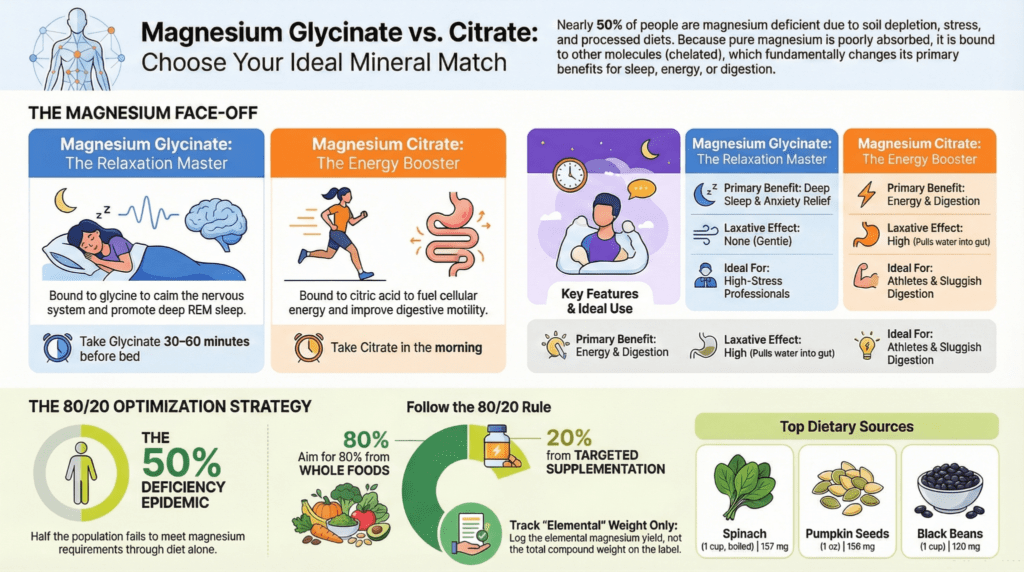
Take 200mg to 400mg of Magnesium Glycinate about 30 to 60 minutes before bed to promote deep, uninterrupted REM sleep.
Magnesium Citrate: The Energy and Digestion Booster
If you are struggling with sluggishness, occasional constipation, or muscle cramps after heavy workouts, Magnesium Citrate is your best option.
What is it?
Magnesium Citrate is formed by binding elemental magnesium with citric acid. Citric acid is a large molecule naturally found in citrus fruits.
Why it Works
Citric acid plays a crucial role in the Krebs cycle (the process your cells use to produce energy). While it won’t give you a jittery rush like caffeine, ensuring you have enough citrate helps optimize your natural cellular energy production throughout the day. Furthermore, Magnesium Citrate operates as an osmotic laxative. It pulls water into your intestines, making it highly effective for treating constipation and improving gut motility.
The Pros:
- Cost-Effective: It is generally much cheaper to produce and purchase than glycinate.
- Relieves Constipation: It is a reliable, natural way to keep your digestive tract moving smoothly.
- Fights Muscle Cramps: Highly effective at replenishing magnesium lost through sweat after intense cardio or weightlifting.
How to Take It:
Take 200mg to 400mg of Magnesium Citrate in the morning or early afternoon with a meal. Because of its mild laxative effect, it is best to start with a smaller dose to see how your digestive system reacts.
Head-to-Head Comparison: Magnesium Glycinate vs Citrate
To make your tracking and purchasing decisions easier, here is a quick cheat sheet:
| Feature | Magnesium Glycinate | Magnesium Citrate |
| Primary Benefit | Deep sleep, anxiety relief, relaxation | Digestion, cellular energy, cramp relief |
| Bound To | Glycine (an amino acid) | Citric Acid |
| Bioavailability | Very High | Good |
| Laxative Effect | None | High (Pulls water into the gut) |
| Best Time to Take | 30-60 minutes before bed | Morning or early afternoon |
| Ideal For | Insomniacs, stressed professionals | Athletes, those with slow digestion |
The Ultimate Tracking Guide: Dietary vs. Supplemental Magnesium
Now that you know the difference between Magnesium Glycinate vs Citrate, you need to know how to integrate them into your diet.
One of the biggest mistakes people make when biohacking is relying entirely on supplements while ignoring their base diet. If you take 400mg of supplemental magnesium but eat zero magnesium-rich foods, you are only hitting the bare minimum daily requirement. Conversely, if you eat a massive amount of dietary magnesium and take a heavy citrate supplement, you might spend your morning running to the bathroom.
To optimize your health, you must track both.
1. Tracking Dietary Magnesium
Your first line of defense should always be whole foods. The Recommended Dietary Allowance (RDA) for magnesium is roughly 400-420mg for men and 310-320mg for women.
Before popping a pill, audit your daily food intake. The most magnesium-dense foods include:
- Pumpkin Seeds: 156mg per ounce (roughly a handful)
- Spinach (Boiled): 157mg per cup
- Almonds: 80mg per ounce
- Black Beans: 120mg per cup
- Dark Chocolate (70-85% cocoa): 64mg per ounce
If you track your macros, pay close attention to your micronutrient breakdown at the end of the day. Are you hitting 300mg through your diet? If so, you may only need a small supplemental dose before bed.
2. Tracking Supplemental Magnesium
When logging your supplements, read the label carefully to track the elemental magnesium, not the total compound weight.
For example, a supplement label might say “Magnesium Glycinate – 1,000mg”. However, the elemental magnesium yielded from that capsule might only be 100mg or 150mg. The rest of the weight is the glycine molecule. Always log the elemental yield to ensure you are not drastically over- or under-dosing.
3. The 80/20 Approach to Magnesium Tracking
The most optimal protocol is to build a diet that provides 70% to 80% of your daily magnesium requirement through nutrient-dense whole foods (like leafy greens, nuts, and legumes). Then, use a specific, targeted supplement for the remaining 20% based on your specific lifestyle needs.
If you had a stressful day and need to sleep, finish your evening with 200mg of Magnesium Glycinate. If your diet lacked fiber that day and you are feeling sluggish, opt for Magnesium Citrate.
Conclusion: Stop Guessing, Start Tracking
The debate between Magnesium Glycinate vs Citrate doesn’t have a single winner—it entirely depends on what your body needs at that specific moment. Glycinate is your ticket to a calm mind and deep sleep, while Citrate is your go-to for energy metabolism and smooth digestion.
However, supplements are meant to supplement a healthy diet, not replace one. The only way to know exactly how much supplemental magnesium you actually need is to know exactly how much you are getting from your food.
Take the guesswork out of your micronutrients. Head over to Nutrients Calculator to easily track your daily meals, analyze your dietary magnesium intake, and see exactly where the gaps in your nutrition are. By balancing your whole foods with the right targeted supplements, you will unlock better sleep, higher energy, and peak daily performance.