
The landscape of weight loss and metabolic health has shifted dramatically over the last few years. GLP-1 receptor agonists—medications like Ozempic, Wegovy, Mounjaro, and Zepbound—have revolutionized how we treat obesity and Type 2 diabetes. By mimicking the hormones that signal fullness to the brain and slowing down gastric emptying, these medications create a profound effect: they turn off the “food noise.”
For many, this is a miraculous relief. But it introduces an entirely new, often unexpected challenge. What do you do when you are practically never hungry, but your body still desperately needs fuel, vitamins, and minerals to function?
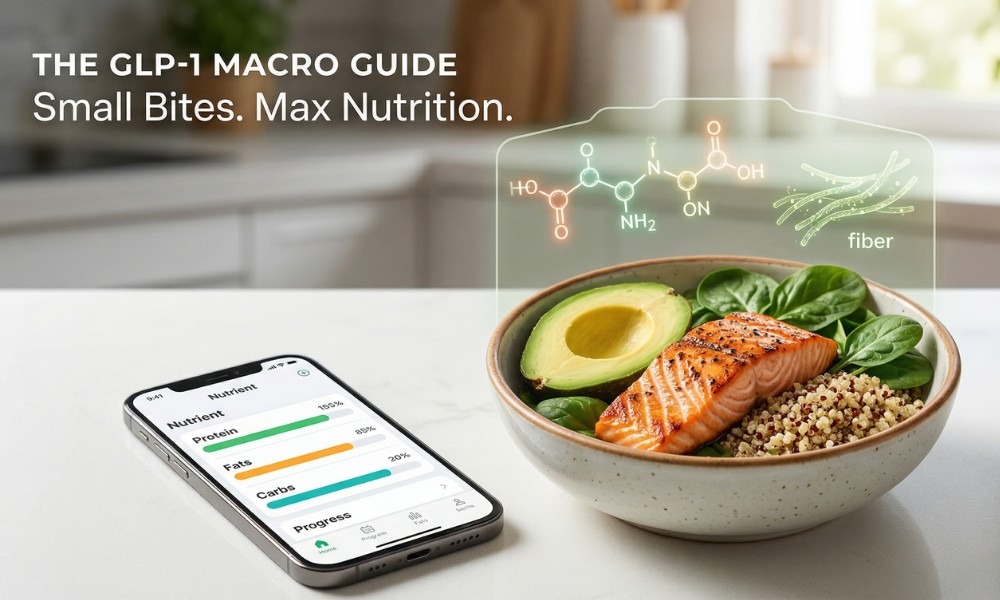
Eating in a steep caloric deficit without a strategic nutritional plan doesn’t just result in fat loss; it leads to muscle wasting, severe fatigue, hair loss, and compromised bone density. When you can only manage a few bites at a meal, every single bite has to count.
This is the ultimate guide to the “GLP-1 Diet.” Here, we will break down exactly how to balance your macronutrients and micronutrients to maintain your health, preserve your metabolism, and feel energized—even when your appetite is completely missing in action.
The GLP-1 Nutrition Paradox: Why “Eating Less” Isn’t Enough
The fundamental mechanism of GLP-1 medications is appetite suppression. However, treating these medications as an excuse to simply starve yourself is dangerous.
When your body enters a severe caloric deficit, it begins looking for energy sources. If you aren’t providing enough dietary protein and calories, your body will break down lean muscle mass for energy. This condition, known as sarcopenia, lowers your basal metabolic rate (BMR). If you ever decide to stop taking the medication, having a lower BMR means the weight will rebound much faster.
Furthermore, severe calorie restriction almost always leads to micronutrient deficiencies. You might be losing weight, but if you are constantly lethargic, experiencing brain fog, and noticing your hair thinning, your nutritional strategy is failing you.
The goal on a GLP-1 isn’t just to eat less. The goal is to eat smarter. And that starts with understanding your macronutrients.
Macro #1: Protein – Your Non-Negotiable Anchor
If you only track one macronutrient while taking a GLP-1 medication, make it protein.
Protein is the building block of your muscles, skin, hair, and immune system. Because rapid weight loss naturally triggers some muscle loss, eating a high-protein diet combined with resistance training is the only way to signal your body to burn fat instead of muscle tissue.
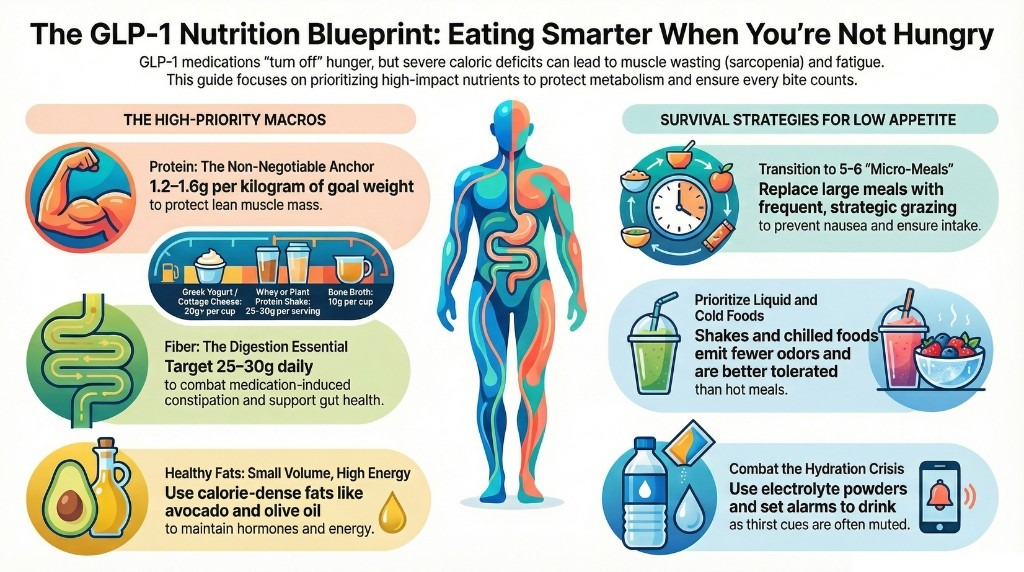
How much protein do you need? While standard dietary guidelines suggest 0.8 grams of protein per kilogram of body weight, this is merely a baseline to prevent deficiency. For optimal health during active weight loss, most experts recommend aiming for 1.2 to 1.6 grams of protein per kilogram of your goal body weight (or roughly 0.6 to 0.8 grams per pound).
To find your exact, personalized target, use our nutrient calculator to input your age, gender, activity level, and goals. It will give you a precise daily protein goal to aim for.
How to hit your protein goal when you have no appetite: Eating a large chicken breast when you feel completely full can be nauseating. Instead, focus on dense, easy-to-digest protein sources:
- Liquid Protein: Your brain processes liquids differently than solid food. A high-quality whey or plant-based protein shake can deliver 25-30 grams of protein in a few easy sips. Clear protein drinks (which taste more like juice than milk) are highly recommended if you are experiencing nausea.
- Bone Broth: Sipping on warm bone broth is soothing on the stomach and provides about 10 grams of highly bioavailable protein per cup.
- Greek Yogurt and Cottage Cheese: These are powerhouse foods. A single cup can yield over 20 grams of protein. They are cool, easy to eat slowly, and require very little chewing.
- Prioritize the Protein: Always eat the protein portion of your meal first. If you fill up on a side salad or bread, you won’t have room for the nutrients that protect your lean mass.
Macro #2: Fiber and Carbohydrates – Gut Health and Quick Energy
One of the primary ways GLP-1 medications work is by delaying gastric emptying—meaning food sits in your stomach longer. While this keeps you full, it frequently causes a very common side effect: severe constipation.
This makes dietary fiber your second most important nutrient. Carbohydrates shouldn’t be feared; they should be strategically chosen for their fiber content and their ability to provide brain energy without spiking blood sugar.
How much fiber do you need? Aim for at least 25 to 30 grams of fiber per day. However, if you aren’t used to eating fiber, increase this slowly to avoid bloating and gas, and ensure you are drinking plenty of water.
How to get fiber without feeling overly stuffed:
- Chia Seeds and Flaxseeds: These are nutritional powerhouses. Two tablespoons of chia seeds contain nearly 10 grams of fiber. Mix them into your protein shakes or yogurt. They add massive nutritional value without adding volume to your stomach.
- Berries: Raspberries and blackberries have the highest fiber-to-sugar ratio of almost any fruit. They are tart, refreshing, and usually palatable even with mild nausea.
- Cruciferous Vegetables (Cooked): While raw broccoli might be too hard to digest on delayed gastric emptying, roasting or steaming vegetables makes them much easier on your gastrointestinal tract while still delivering essential fiber.
Macro #3: Healthy Fats – Hormonal Support in Small Packages
Fats are the most calorie-dense macronutrient (9 calories per gram, compared to 4 calories per gram for carbs and protein). When you are struggling to eat enough total calories to prevent a metabolic crash, healthy fats are your best friend.
Dietary fats are crucial for the absorption of fat-soluble vitamins (Vitamins A, D, E, and K) and for maintaining healthy hormone production.
How to integrate fats into a low-appetite diet:
- Avocados: Half an avocado provides healthy monounsaturated fats and a solid dose of fiber.
- Nut Butters: A single tablespoon of peanut or almond butter packs about 100 calories and healthy fats into a tiny, easily consumed volume.
- Extra Virgin Olive Oil: Drizzling an extra tablespoon of high-quality olive oil over your vegetables or salads is an invisible way to add 120 calories of heart-healthy fats without making you feel any fuller.
The Hidden Danger: Micronutrient Deficiencies and Hydration
When food intake drops drastically, it becomes mathematically impossible to get all your required vitamins and minerals from food alone. People on GLP-1 therapies frequently become deficient in Iron, Vitamin B12, Calcium, and Vitamin D.
The Hydration Crisis: Furthermore, people often rely on food for a significant portion of their daily water intake. When you stop eating, you inadvertently stop hydrating. GLP-1 medications also mute your thirst cues. Chronic dehydration can mimic hunger, cause severe fatigue, and worsen constipation.
Actionable Steps for Micros and Hydration:
- Consider a Multivitamin: Speak to your healthcare provider about a high-quality, comprehensive multivitamin to fill the gaps in your drastically reduced diet.
- Electrolytes are Essential: Drinking plain water might not be enough. Adding an electrolyte powder (containing sodium, potassium, and magnesium) to your water can help combat the dizziness and lethargy often misattributed to the medication itself.
- Set Liquid Alarms: Do not wait until you feel thirsty to drink. Set alarms on your phone to remind you to take a few sips of water or a protein shake every hour.
Actionable Strategies: How to Eat When You Hate the Idea of Food
Knowing your macros is only half the battle; actually consuming them requires a change in habits. Try these strategies if you are struggling:
- Ditch the “Three Square Meals” Rule: The days of a massive breakfast, lunch, and dinner are over. Transition to eating 5 or 6 “micro-meals” or snacks throughout the day. A hard-boiled egg at 10 AM, a protein shake at noon, and a small apple with almond butter at 3 PM is vastly superior to forcing down a massive dinner that makes you sick.
- Rethink “Snacking”: In normal dieting, grazing is discouraged. On a GLP-1, strategic grazing is a survival tool. Keep nutrient-dense, high-protein snacks visible and accessible.
- Temperature Matters: If you are experiencing nausea, hot foods with strong smells can be highly off-putting. Cold foods—like chilled fruit, iced protein shakes, cold cuts, or cottage cheese—emit fewer odors and are generally much better tolerated.
The Bottom Line: Calculate, Track, and Adjust
Taking a GLP-1 medication is a powerful step toward metabolic health, but the medication is a tool, not a cure-all. It gives you the space to make rational, calculated decisions about your nutrition without the constant distraction of cravings.
Because your appetite is no longer a reliable indicator of what your body needs, the math matters more than ever. You have to ensure you are hitting a minimum threshold of calories, protein, and fiber to thrive.
Don’t guess what your body needs. Take the guesswork out of your new dietary landscape. Head over to our Nutrients Calculator today to establish your personalized baseline for calories, protein, carbs, and fats. Plug in your current metrics and your weight loss goals, and start building a nutrition plan that works with your medication, ensuring you lose the fat while keeping your strength, energy, and health intact.