
As we move deeper into 2026, the shift toward flexitarian and fully plant-based lifestyles during the warmer spring and summer months is more popular than ever. People are swapping heavy meats for vibrant, earth-grown meals. However, beneath the beautiful aesthetics of a summer Buddha bowl lies a deeply frustrating dietary pain point: protein quality. Unlike animal products, most plant foods do not naturally contain a perfect profile of amino acids.
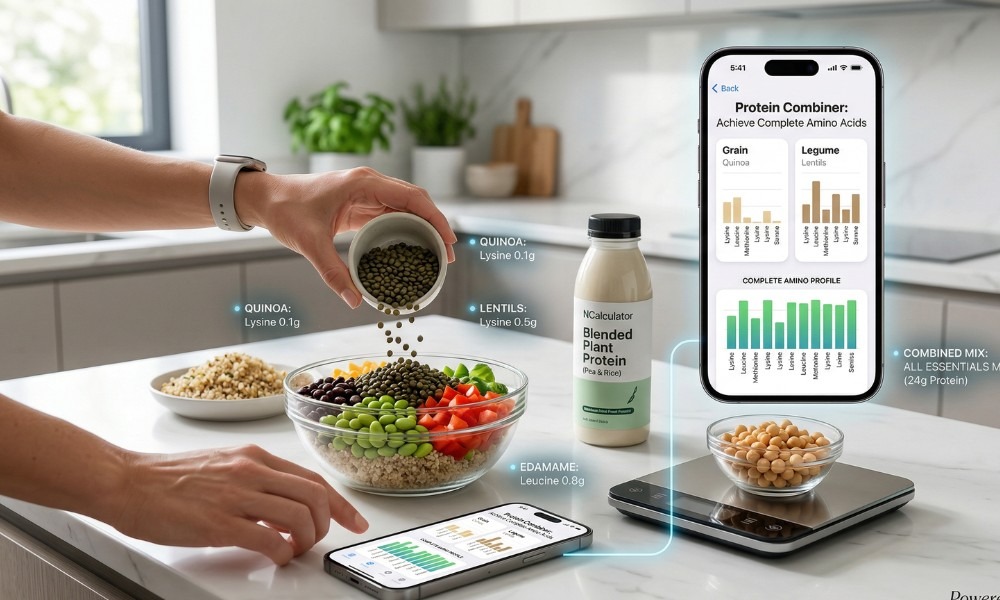
If you are transitioning to a meatless lifestyle, learning how to combine plant proteins to ensure your body gets everything it needs to build muscle, repair tissue, and maintain immune health is absolutely critical. Unfortunately, tracking these intricate microscopic details manually can easily ruin the joy of eating. In this comprehensive guide, we are going to break down the science of amino acids, provide you with the ultimate visual pairings, and show you exactly how to bypass the tedious nightmare of manual tracking forever.
The Science Behind Amino Acids: Why “Complete” Matters
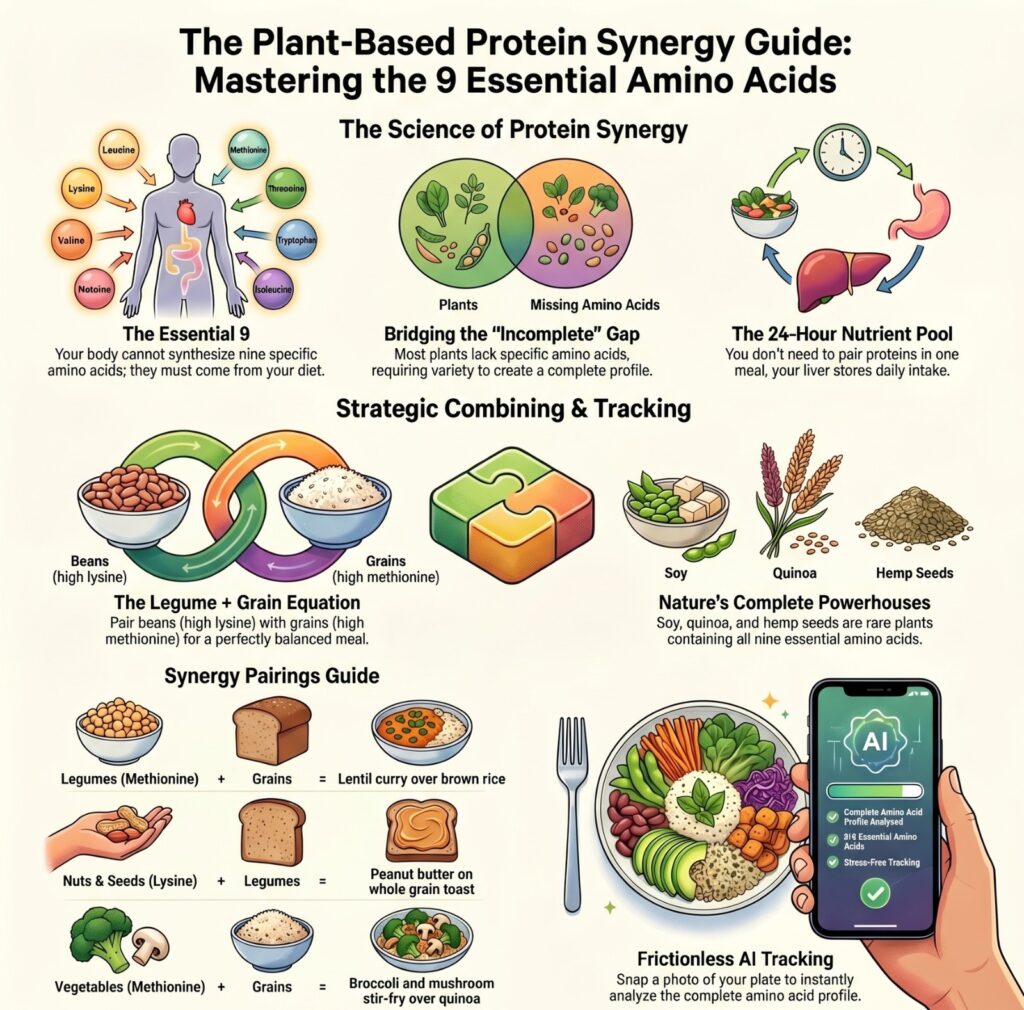
To understand the mechanics of plant-based nutrition, we have to look at the building blocks of protein: amino acids. Your body uses 20 different amino acids to function properly. While your body can synthesize 11 of them on its own, there are 9 specific amino acids—known as essential amino acids—that you must obtain directly from your diet. These include histidine, isoleucine, leucine, lysine, methionine, phenylalanine, threonine, tryptophan, and valine.
When a single food source contains all nine of these in adequate proportions, it is considered a “complete protein.” Animal products like chicken, beef, and eggs are naturally complete. However, when we look at the essential amino acids in plants, the story gets a bit more complicated. Most plant-based foods are considered “incomplete proteins.” This doesn’t mean they are bad; it simply means they are low in one or more essential amino acids (referred to as the “limiting amino acid”).
For example, legumes (like beans and lentils) are generally low in methionine but rich in lysine. Conversely, grains (like rice and wheat) are low in lysine but rich in methionine. By eating both, you bridge the nutritional gap.
The Zero-Volume Pain Point: The Tedious Nightmare of Manual Tracking
Here is the hyper-specific, everyday frustration that derails almost every well-intentioned plant-based dieter: the math.
Let’s say you are making a complex, 10-ingredient vegan stir-fry. You have quinoa, edamame, broccoli, a peanut sauce, some sesame seeds, and bell peppers. If you want to know if you successfully created a complete protein meal, the traditional approach is incredibly tedious. You have to pull out a food scale, weigh the quinoa (is that dry or cooked weight?), measure the peanut butter by the tablespoon, estimate the sesame seeds, and then type every single ingredient into a clunky macro-tracking app.
Even worse, most basic trackers only show you total protein—they don’t break down the specific plant-based amino acid profile. Guessing these macros at a restaurant or spending 15 minutes typing in a single recipe before you are “allowed” to eat is a frictionless-diet killer. It turns nutrition into a massive spreadsheet rather than a sustainable lifestyle.
Step-by-Step: How to Combine Plant Proteins Without the Stress
What if you could completely eliminate the food scale, the barcode scanning, and the manual typing? This is where NutrientsCalculator.com revolutionizes the way you interact with your food.
We believe that tracking your nutrition should take exactly three seconds. With NutrientsCalculator.com, you don’t need to dissect your meal or guess portion sizes to figure out if you’ve hit your amino acid goals. You simply snap a photo of your food. Our smart analysis technology instantly recognizes the food items on your plate—whether it’s a complex mixed salad at a fast-casual restaurant or a homemade lentil soup. The AI identifies the ingredients, estimates the volume, and instantly calculates the complete nutritional breakdown, including exactly which essential amino acids are present.
There is absolutely no manual logging, weighing, or typing required. By snapping a quick picture, NutrientsCalculator.com instantly cross-references the ingredients and tells you if you’ve achieved a complete protein profile for that meal. It takes the frustrating guesswork out of plant-based eating and puts the power of a clinical dietician directly into your smartphone camera.
The Master Complementary Proteins Reference Chart
To help you visualize how these pairings work in the real world, we have compiled a detailed complementary proteins chart. Use this structured data reference to understand how different plant food groups compensate for each other’s limiting amino acids.
| Food Group 1 | Limiting Amino Acid in Group 1 | Food Group 2 | Limiting Amino Acid in Group 2 | The Synergistic “Complete” Meal Example |
| Legumes (Beans, Lentils, Peas) | Methionine, Tryptophan | Grains (Rice, Wheat, Oats, Corn) | Lysine, Threonine | Black bean and corn salad; Lentil curry over brown rice; Hummus and whole wheat pita. |
| Nuts & Seeds (Almonds, Sunflower, Chia) | Lysine, Isoleucine | Legumes (Peanuts, Beans, Chickpeas) | Methionine, Tryptophan | Trail mix with roasted chickpeas and almonds; Peanut butter on whole grain toast. |
| Vegetables (Spinach, Broccoli, Mushrooms) | Methionine, Isoleucine | Grains (Quinoa, Barley, Rice) | Lysine, Threonine | Broccoli and mushroom stir-fry over quinoa; Spinach and barley salad. |
| Grains (Rice, Wheat, Oats) | Lysine, Threonine | Dairy Alternatives (Soy Milk, Pea Milk) | Methionine (varies by brand) | Oatmeal cooked in fortified soy milk; Whole grain cereal with pea protein milk. |
Real-World Scenarios: Mastering Plant-Based Protein in the Wild
To truly understand how this seamless tracking approach changes your daily routine, let’s look at two incredibly common real-world scenarios where plant-based eaters usually struggle.
Scenario 1: The Fast-Casual Salad Bar
It’s 1:00 PM on a Tuesday, and you step into a bustling fast-casual spot like Cava or Sweetgreen. You build a massive, customized vegan bowl: a base of wild rice and super greens, topped with black lentils, roasted sweet potatoes, a scoop of hummus, pumpkin seeds, and a tahini dressing. You sit down to eat.
The Old Way: You frantically try to search the restaurant’s online PDF menu to piece together the macros, guessing how many ounces of lentils the employee actually scooped. You have no idea if your amino acids are balanced.
The NutrientsCalculator Way: You open NutrientsCalculator.com, point your camera at the bowl, and snap a picture. Instantly, the tool recognizes the wild rice (grain), the lentils (legume), and the pumpkin seeds (seeds). It automatically calculates that you have successfully combined complementary proteins, highlighting your complete amino acid profile for the meal. You lock your phone and enjoy your lunch in peace.
Scenario 2: The Complex Homemade Stir-Fry
It’s Sunday evening, and you are trying to use up leftover vegetables in your fridge. You throw together tofu, snap peas, bell peppers, cashews, and soba noodles into a wok with a dash of soy sauce and sesame oil.
The Old Way: You separate the ingredients on the counter, weighing the tofu, counting the cashews, and reading the back of the soba noodle package, doing complex math to figure out your portions. By the time you’re done, the food is cold.
The NutrientsCalculator Way: You plate the hot stir-fry, snap a photo with our app, and dig in. The smart analysis recognizes the soy-based tofu (which is actually a complete protein on its own) and factors in the extra crunch of the cashews and the carbs from the noodles, instantly logging your perfect plant-based dinner.
Top 5 Plant-Based Pairings to Memorize
While our app does the heavy lifting, it is always helpful to have a mental rolodex of simple, tasty combinations. Here are five of the best pairings to ensure you are getting everything you need:
- Rice and Beans: The ultimate classic. The rice brings the methionine, while the beans bring the lysine.
- Whole Wheat Pita and Hummus: The chickpeas in the hummus pair perfectly with the wheat in the pita bread.
- Peanut Butter on Whole Wheat Bread: A nostalgic favorite that is actually a nutritional powerhouse.
- Oatmeal with Almonds and Chia Seeds: A perfect, complete breakfast to start your morning.
- Spirulina and Nuts: Adding a scoop of spirulina (a highly bioavailable protein) to a smoothie with nut butter creates an incredible amino acid profile.
(Note: If you are looking for single foods that don’t need combining, the best complete protein sources for vegans include quinoa, buckwheat, hemp seeds, chia seeds, and soy products like tofu, tempeh, and edamame).
Frequently Asked Questions (People Also Ask)
1. Do I need to eat complementary proteins at the exact same meal?
No, you do not. This is one of the most common and outdated myths in plant-based nutrition. You do not need to eat rice and beans in the exact same bite, or even at the exact same meal. Your body maintains a “pool” of amino acids derived from the food you eat throughout the day. As long as you eat a variety of plant proteins over a 24-hour period, your liver will pull the necessary amino acids from this pool to synthesize complete proteins.
2. What plant foods are already complete proteins?
While most plant foods require pairing, nature does provide several incredible exceptions. Soy products (tofu, tempeh, edamame, and soy milk) are fully complete proteins, boasting a stellar amino acid profile. Quinoa is a complete protein, making it an excellent base for grain bowls. Buckwheat, hemp seeds, chia seeds, and nutritional yeast also contain all nine essential amino acids.
3. Can you get enough protein on a strict vegan diet without soy?
Absolutely. While soy makes things easier due to its high protein density, a soy-free vegan diet can easily meet all protein requirements. The key is relying heavily on other legumes (lentils, black beans, chickpeas), whole grains (oats, brown rice, quinoa), and a generous daily serving of nuts and seeds (pumpkin seeds, almonds, walnuts). By snapping a photo of these diverse meals with NutrientsCalculator.com, you can verify you are hitting your targets without needing soy.
4. How much protein does a flexitarian really need?
The Recommended Dietary Allowance (RDA) for the average sedentary adult is 0.8 grams of protein per kilogram of body weight (or about 0.36 grams per pound). However, if you are active, strength training, or recovering from injury, that number should increase significantly to anywhere from 1.2 to 2.0 grams per kilogram. Flexitarians have a slight advantage as they can supplement their plant-based days with occasional high-density animal proteins, but the baseline goal remains the same.
5. Is it harder for the body to digest plant proteins?
Generally, plant proteins are slightly less bioavailable than animal proteins. This is due to the physical structure of plants; they contain fiber, phytic acid, and other anti-nutrients that can slightly inhibit the absorption of protein in the digestive tract. Because of this lower digestibility rate, many sports nutritionists recommend that vegans and heavily plant-based eaters aim for about 10% to 20% more total protein daily to ensure their net absorption of essential amino acids meets their physical requirements. Cooking, soaking, and sprouting legumes and grains can significantly improve this digestibility.
Conclusion
Embracing a plant-based diet in 2026 should be an exciting journey filled with vibrant flavors and incredible health benefits, not an exhausting chore of spreadsheets and calculators. Understanding how to combine plant proteins is vital for your health, but tracking those combinations manually is a thing of the past. By leveraging the smart photo-analysis technology at NutrientsCalculator.com, you can eat intuitively, confidently, and entirely stress-free. Put away the food scale, plate your meal, snap a photo, and let the technology ensure your body is getting all 9 essential amino acids it needs to thrive.